

Châteauneuf-du-Pape

Literally meaning ‘The Pope’s New Castle’, this is the most famous AOC from the Rhône Valley.
The soil here is a combination of rocks, stone, sand and limestone. Stones and pebbles are referred to as ‘Galets Roules’ which absorb the heat during the day and radiate back to the vines at night which helps in the ripening of the berries.
About 95% of Red Wines and 5% of Whites.
Tasting Profile
For Reds – It has a wide range of styles but the shared characteristics among all are fresh red and black cherries, strawberries and raspberry, kirsch, black pepper, spices. It also has a characteristic aroma called ‘Garrigue’ – mix herbs, thyme, rosemary, basil, oregano, etc.
The wines are delicious young but also have a good ageing capacity.
For Whites – Tropical Fruits, Citrus, Honeysuckle and Spicy notes. They are rich and luscious in texture with exotic fruits as well on the palate.
A very few estates also produce small amount of Vin de Paille (a sweet wine made by drying of whole clusters after harvesting)
Traditional Producers prefer to age their wines in ‘Foudres’ – large giant oak casks from 30 to 60 hectoliters capacity, preferably old foudres with some regions having close to 100 years old as well. Small French oak barrels, barriques or demi-muids are also used for aging which can last anywhere from 12-24 months. Some could even go to 5 years or longer.
The following grapes are permitted in AOC Châteauneuf-du-Pape – 13 grapes and 18 if counted by colors.
- Grenache (Noir, Blanc and Gris)
- Syrah
- Mourvedre
- Cinsault
- Vaccarese
- Terret Noir
- Counoise
- Piquepoul (Noir, Blanc and Gris)
- Clairette (Blanc and Rose)
- Picardan
- Roussanne
- Bourboulenc
- Muscardin
The best vintages from 21st century are 2000, 2001, 2003, 2005, 2006, 2007, 2009, 2010, 2012, 2015, 2016.
Monbazillac
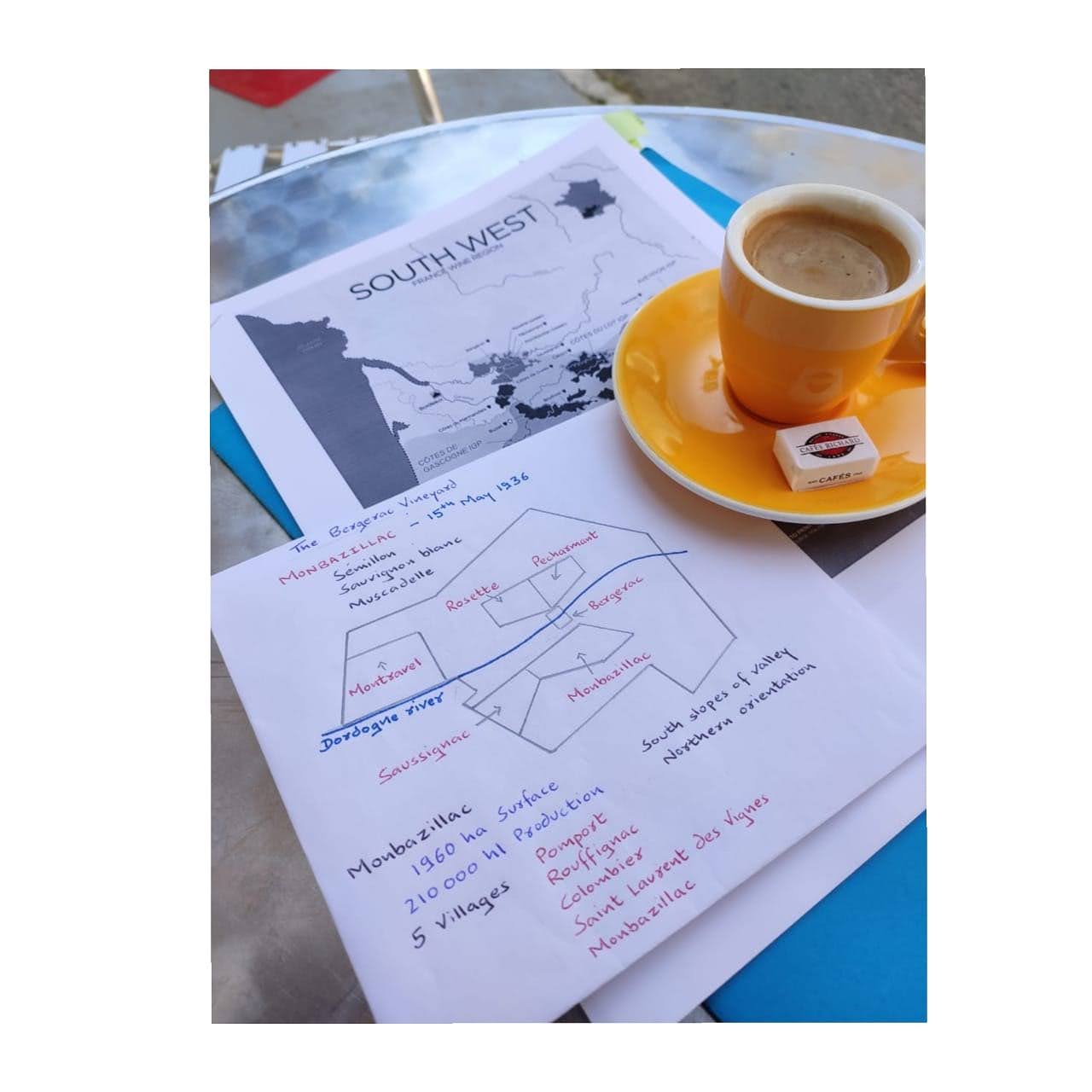 The Monbazillac vineyards spread over the south slopes of the valley, and they are some of the oldest in the region. Their particularity is their North orientation, steeply sloping towards the plains surrounding the Dordogne river. The Terroir of Monbazillac stretches over almost 10,000 acres and 5 villages: Pomport, Rouffignac, Colombier, Saint Laurent des Vignes and Monbazillac.
Permitted grape varieties : Sémillon, Sauvignon blanc, Muscadelle.
Permitted base yield is 40 hectoliter per hectare (although actual yields are lower for many producers). The grapes are harvested in successive stages.
Two types of Monbazillac are available:
- Classic Monbazillac – Sugar levels ranging in the first category of liquoreux – it is perfect for an aperitif drink, or served with a meal, with selected dishes.
- Monbazillac Sélection de Grains Nobles (SGN) – “Selected Noble Grapes” a wine with a level of sweetness reaching above 85 gram, for a pure moment of pleasurable enjoyment, or accompanying a well-chosen dessert.
Only wine made from grapes grown in Monbazillac that are affected by the “noble rot” (Botrytis cinerea) can be sold under the Monbazillac designation.
Ageing potential: 3 to 15 years
Serving temperature: 8 to 10 ° C
Profile: The wines are straw yellow in color which becomes amber with age. Aromas of flowers, honey, almonds and peaches. Rich, fatty, mellow, powerful, bouquet.
Food and Wine: Foie gras, poultry with cream, fish with cream sauce, blue-type blue-veined cheeses like Roquefort, etc.
Cassis
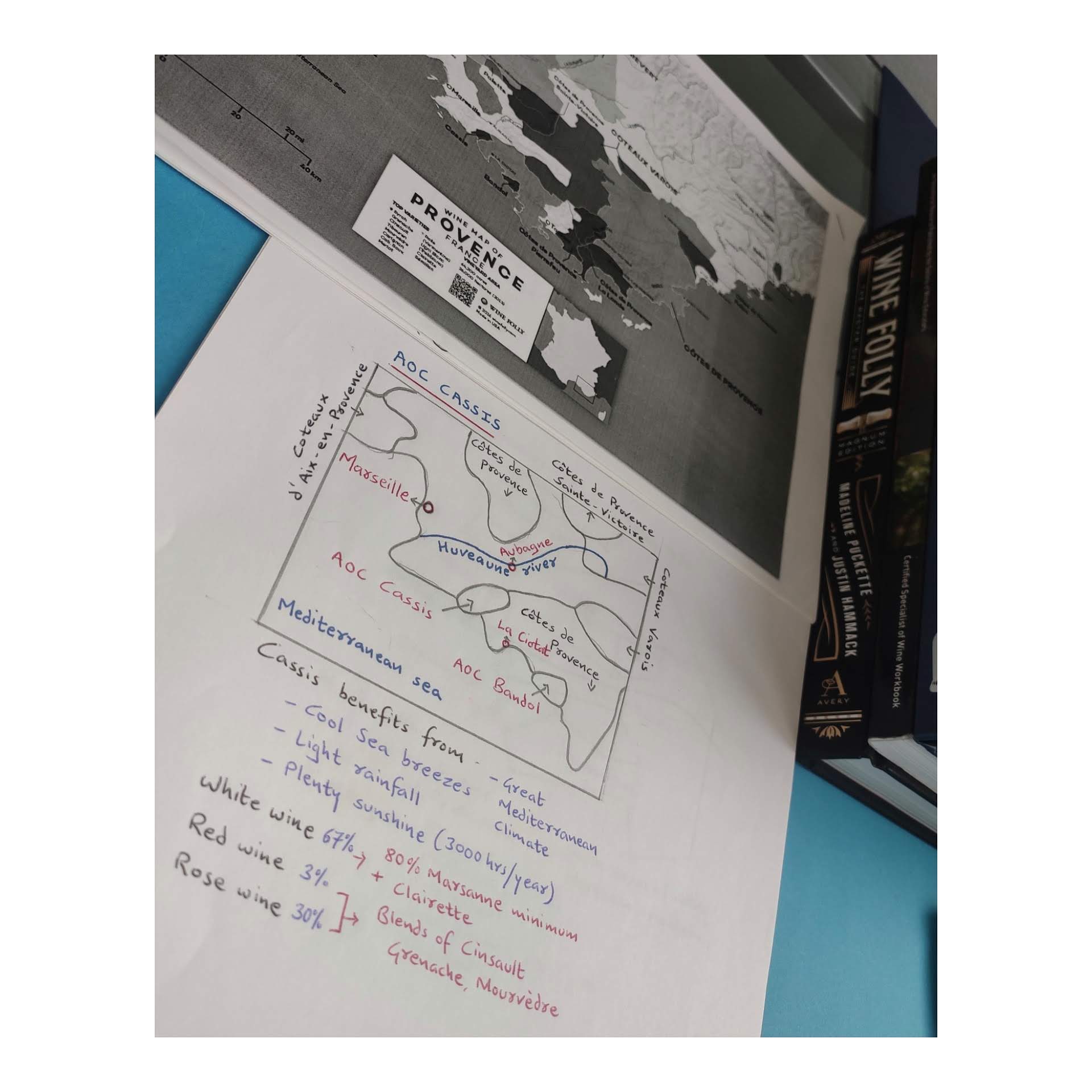 Cassis wine is not to be confused with crème de cassis, a sweet blackcurrant liqueur that’s a speciality of Dijon in Burgundy.
The Cassis AOC vineyards today cover 215 hectares and produce an average of 7,500 hectolitres per year.
Of all AOC Cassis wines approx: White wines – 67% , Rosé wines – 30% , Red wines – 3%
The main authorized grape varieties are Cinsault, Grenache noir, Mourvèdre, Clairette, Marsanne; but wine-growers can also cultivate Barbaroux, Carignan, Terret noir, Bourboulenc, Pascal, Sauvignon, Terret blanc, Ugni blanc.
Each vineyard must be planted with at least 60 % Marsanne and Clairette which are the two major varieties in the appellation.
- Marsanne contributes delicate, elegant aromas highlighted with notes of white flowers, and it provides a good lingering finish. As Marsanne ages, it gives off subtle notes of honey.
- Clairette is native to Provence and thrives on arid limestone soils. It is perfectly suited to the thin, dry harsh soils in the Cassis vineyards. Clairette contributes to the freshness of the Cassis whites, bringing scents of anis, acacia honey and white fruits. Clairette also expresses the garrigue or fragrant wild herbes de Provence, and contributes body and fleshiness.
The vines rest on soils made of limestone rich in iron oxide.
The following conditions has a great impact on this region –
- A great Mediterranean climate
- Cool Sea breezes
- Light Rainfall
- High amount of sunshine is (3000 hours per year)
Tavel
Tavel is a 933 hectare region in the Southern Rhône vineyards.
Its terroir benefits from a Mediterranean climate and clay limestone, marl, sandstone limestone and rolled pebbles (galets roules – the same as in Châteauneuf du Pape)
In Tavel, some of the must is kept with the skins longer and then blended into the lighter must, which is what makes the wine more powerful, more tannic and darker than other rosés.
The potential alcohol can go up to 13.5%.
Tavel Wines show beautiful ageing qualities.
Tavel is one of the roses which is not just a summer drink, it can accompany a meal from starters to dessert.
Grape varieties : 9 Permitted – Each grape is limited to 60%.
- Grenache
- Cinsault
- Bourboulenc
- Clairette rose and blanche
- Mourvèdre
- Picpoul
- Syrah
- Carignan
- Calitor
Arbois
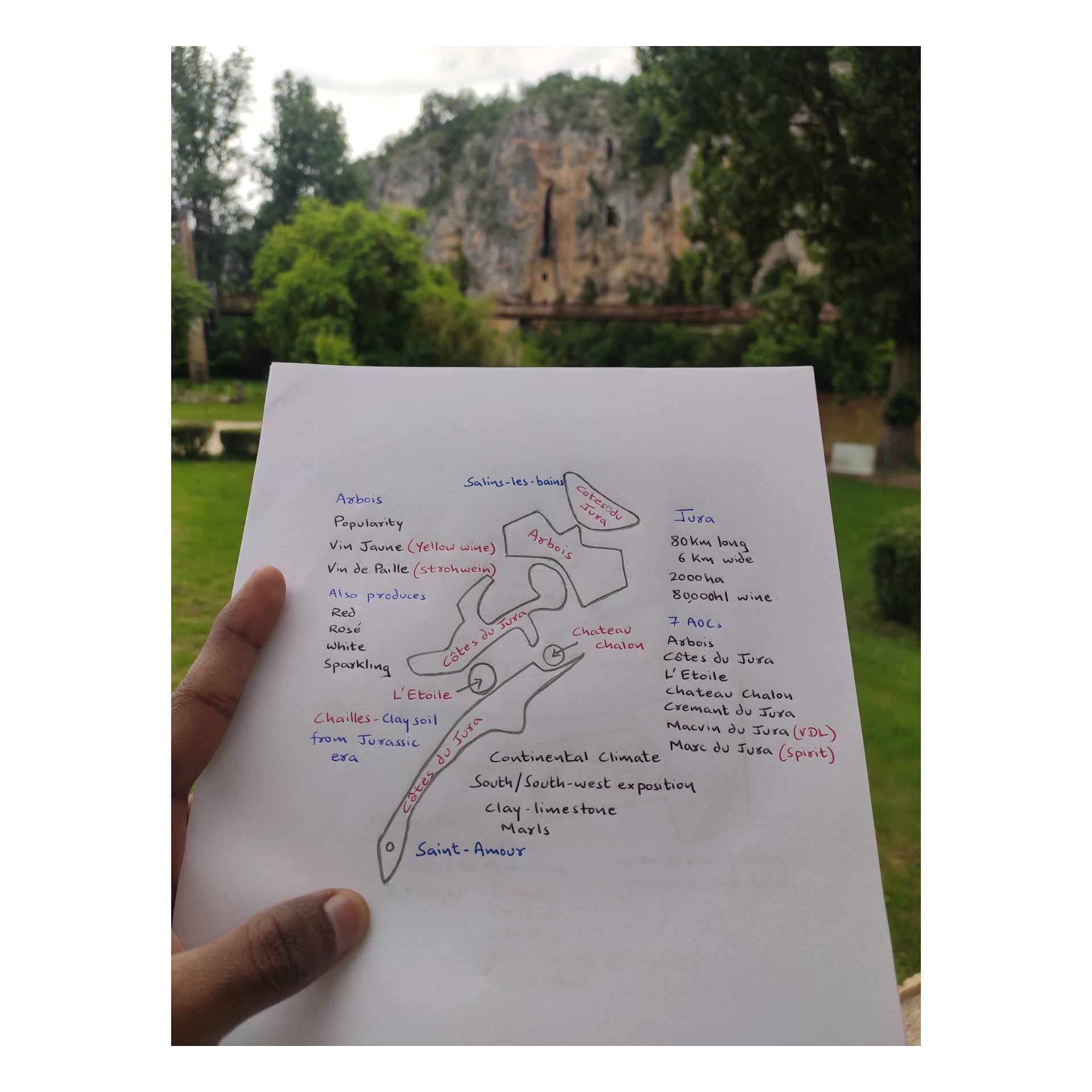
Arbois wine is a specialty of Jura, a department in the northeast of France.
The most popular wines of this region are Vin Jaunes and Vin de Paille.
The AOC Arbois Vin Jaune – Yellow Wine from Savagnin Blanc is made in a process very similar to Fino Sherry in that a yeast forms on the surface of the wine as it is kept in large open vats. The wine oxidizes under the flor and takes on a yellowish hue, along with notes of almonds and bitter herbs.
The AOC Arbois Vin de Paille – ( Strohwein )
White varieties – Savagnin Blanc and Chardonnay.
Red varieties – Poulsard Noir and Trousseau Noir.
Vins de Paille is made by allowing the grapes to dry on straw mats before fermentation. The wine spends a long time in a barrel where it can take on a slightly oxidized character, along with extreme depth and richness.
Red and Rose wines – Trousseau Noir, Poulsard Noir and Pinot Noir.
White wines – Savagnin Blanc ( Traminer ) Chardonnay and Pinot Blanc.
The AOC Arbois Mousseux – White sparkling
Savagnin Blanc ( Traminer ) Chardonnay and Pinot Blanc.
Vines in Jura benefit from a clay soil called “chailles,” which can be found under a layer of rock that dates back to the Jurassic era.
Arbois is the birth place of Louis Pateur – French Microbiologist.
 The Wine Geek
awesome information buddy! loved the blogs
LikeLike