
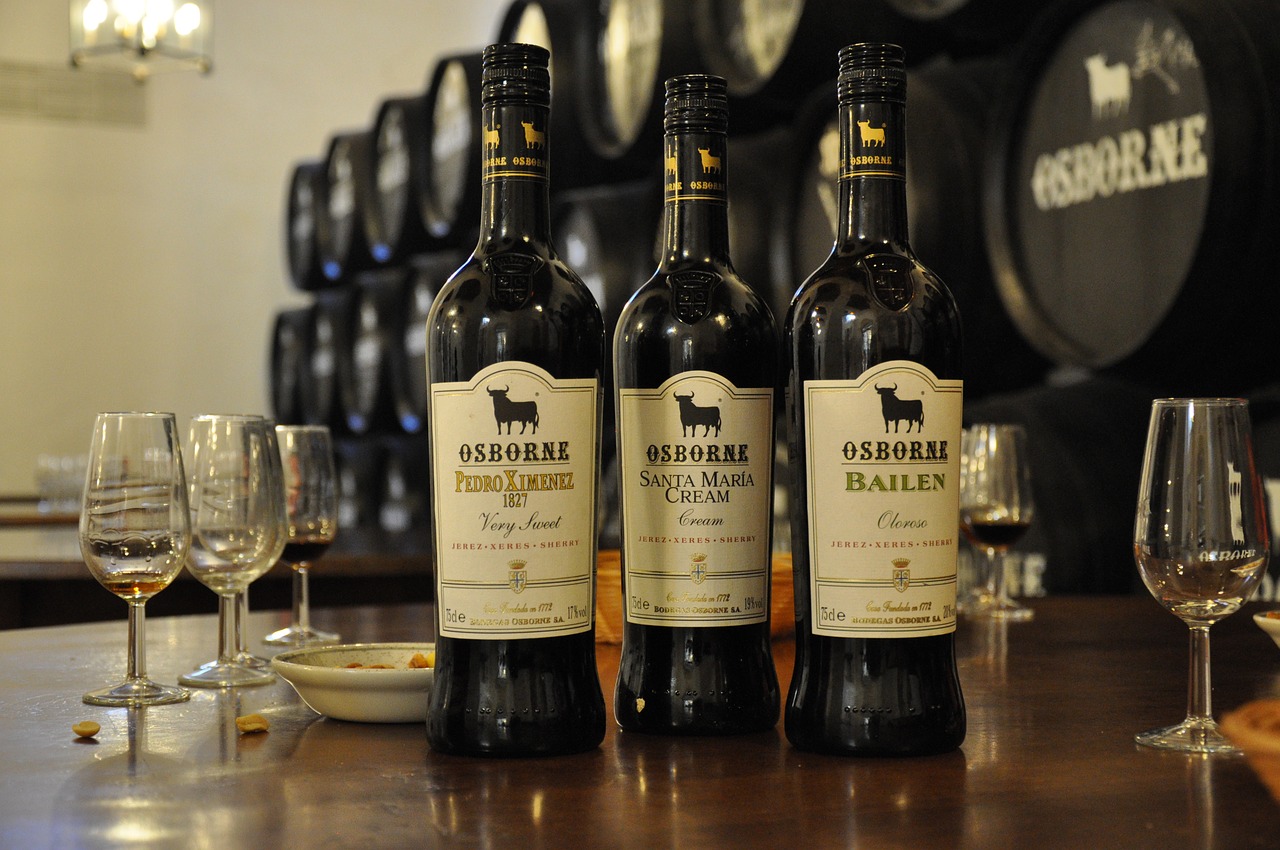
Sherry is a fortified wine made from white grapes that are grown near the city of Jerez de la Frontera in Andalusia, Spain.
Sherry was previously known as sack, from the Spanish saca, meaning "extraction" from the solera.
Under the official name of Jerez-Xérès-Sherry, it is one of Spain’s wine regions, a Denominación
de Origen Protegida (DOP).
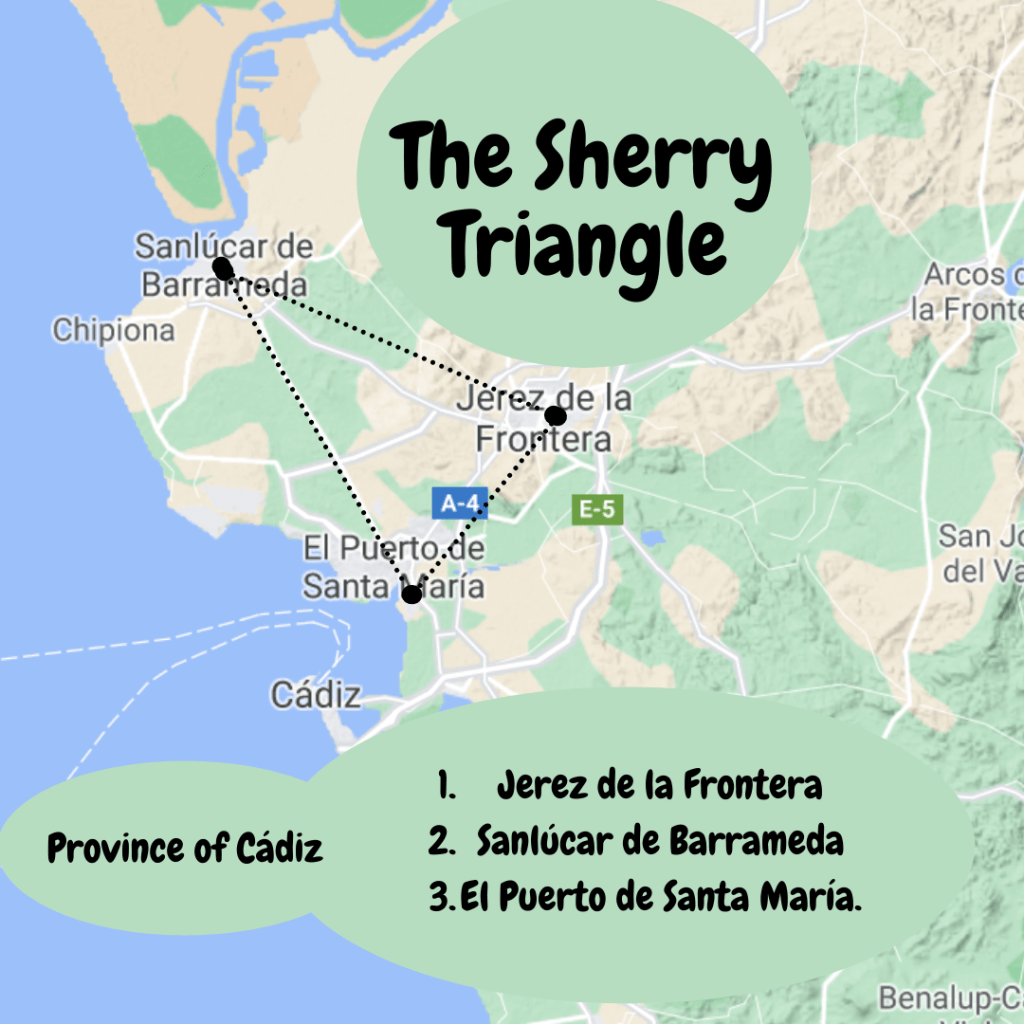
All wine labelled as “Sherry” must legally come from the Sherry Triangle, an area in the province
of Cádiz between Jerez de la Frontera, Sanlúcar de Barrameda, and El Puerto de Santa María.
Climate
It has a warm mediterranean climate with an average annual temperature of 17.3ºC with very
mild winters and very hot summers where temperatures frequently rise above 40ºC. The region
enjoys a very high average of around 3,200 hours of effective sunlight.
The rain mostly falls between the months of October and May, averaging 600 mm (24 in)
The region gets influence from the following two winds:
Poniente (from the west – cold and humid winds) and Levante (from the southeast – warm and
dry winds)
Soil
There are three types of soil in the Jerez district for growing the grapes for Sherry
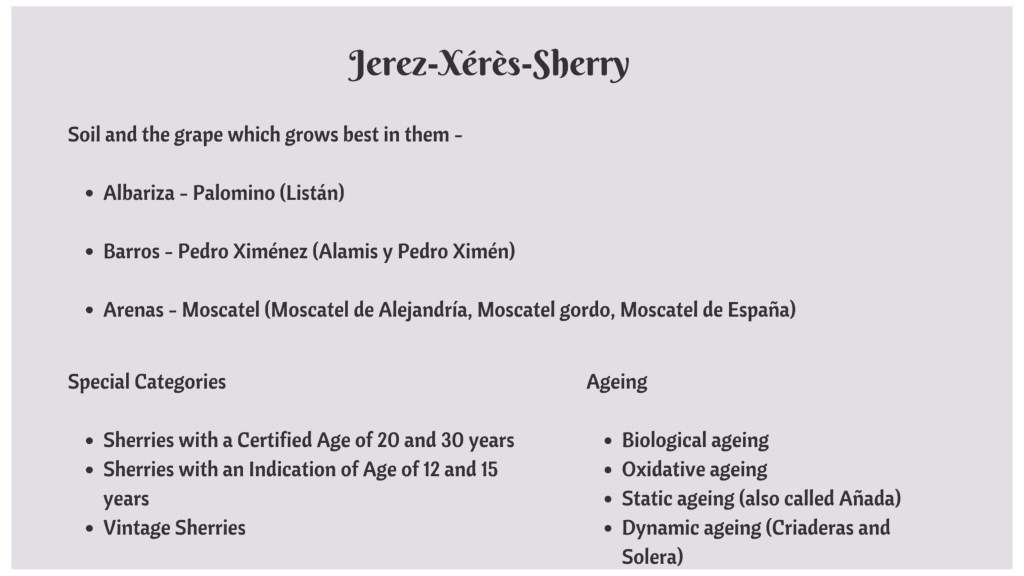
Albariza: The soil is very light and almost white, composed of about 30-80% chalk along with
sand, clay and limestone. It is the most suitable soil for Palomino grapes.
By law 40 percent of the Palomino grapes making up a sherry must come from albariza soil.
Barros: This is a dark soil with about 10% chalk along with organic matter, iron oxide and a very
high clay content. Most suitable for Pedro Ximénez grapes
Arenas: The soil is yellowish in color with about 10% chalk along with a high sand content
providing good water retention. Best for growing Moscatel grapes.
Grapes
The following three white grapes are permitted and grown for the production of Sherry.
Palomino (Listán): Approximately 90 per cent of the grapes grown for sherry are Palomino. As varietal table wine, the Palomino grape produces a wine of very bland and neutral characteristics, so its better suitable to undergo sherry production methods and enhance its taste and flavor.
Pedro Ximénez (Alamis y Pedro Ximén): used to produce sweet wines. When harvested these grapes are typically dried in the sun to concentrate their sugars before undergoing fermentation.
Moscatel (Moscatel de Alejandría, Moscatel gordo, Moscatel de España): used to produce sweet wines. A better suited variety of vineyards close to the sea.
Fermentation
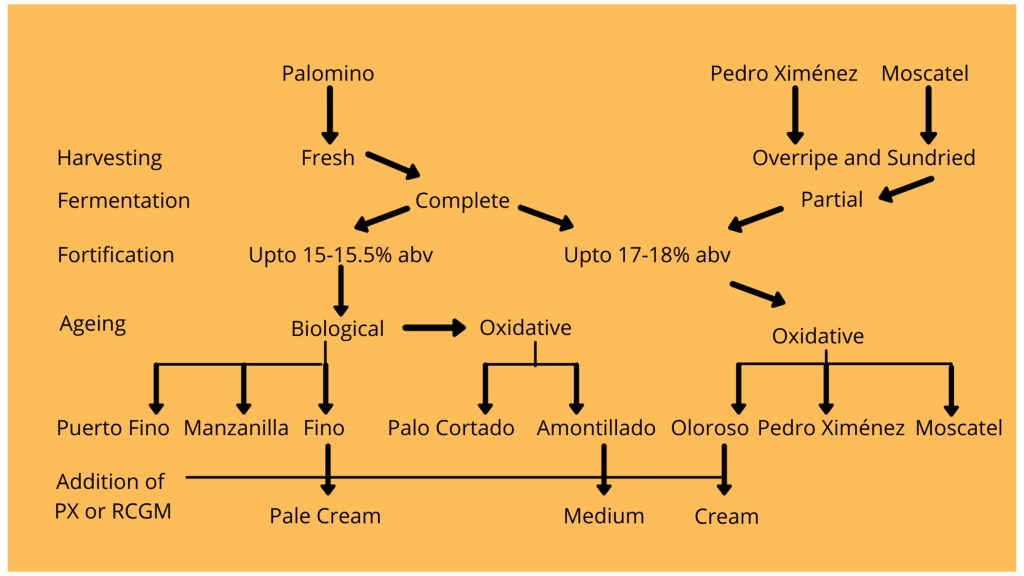
The Palomino grapes are harvested in early September.
The ‘primera yema’, must from the first pressing, is used to produce Fino styled sherries; whereas the ‘segunda yema’, must from the second pressing, is used for Oloroso styled sherries
Additional pressings are used for lesser wines, distillation, and vinegar.
The must is then fermented until the end of November, producing a dry white wine with 11–12% alcohol content.
Previously, the fermentation and initial aging was done in wood; now it is almost exclusively done in stainless steel, with few exceptions.
Fortification
It is done immediately after fermentation
It is the addition of small amounts of alcohol to a fermented wine in the case of the dry wines to begin biological or oxidative ageing to make a desired style of Sherry or to partially fermented wine in the case of PX and Moscatel.
The Spanish word for fortification is “encabezado”.
The alcohol used to fortify is called ‘destilado’, made by distilling wine, mostly from La Mancha.
The distilled spirit is first mixed with mature sherry to make a 50/50 blend known as ‘mitad y mitad’ (half and half) or ‘miteado’
The ‘mitad y mitad’ is mixed with the younger sherry to the proper proportions.
This two-stage procedure is critically important to prevent strong alcohol from shocking the young sherry and spoil it.
Those wines classified as apt for ageing as finos and manzanillas are fortified until they reach a total alcoholic content of 15 per cent by volume.
Those wines classified to undergo ageing as olorosos are fortified in such a way as to reach an alcoholic content of at least 17%.
The amount to be added for fortification is decided by the rule of adding about 5-6 litres of spirit for each degree of alcohol required.
The wines destined to be made into Sherry normally have about 11-12.5% alcohol levels .
Example – A sherry butt of 500 litres capacity having 12% abv wines destined for finos will require about 18 litres(3 degrees ╳ 6 litres) to raise the alcoholic strength to 15%.
Note – the veil of flor feeds on alcohol, thus alcohol level might decrease by 1-1½ % in case of biological ageing.
(due to this reason finos might need further fortification before bottling as by law they should have minimum 15% at bottling)
In oxidative ageing, due to lack of any covering on the top, the water evaporates thus concentrating the alcohol levels by upto 5%.
Ageing
Sherry ageing can be biological, oxidative or both.
Regardless of the type ageing may be done either statically or dynamically.
Dynamic ageing (Criaderas and Solera)
Dynamic ageing is the most known characteristic of sherries.
Biological Ageing (under flor)
In biological ageing, the main “working agent” is sherry yeasts, which form a film on the wine’s surface (or flor).
Sherries undergoing biological ageing are Fino, Manzanilla, Puerto Fino, Amontillado, Palo Cortado.
Sherry yeasts that form flor, consume residual sugars, ethanol, glycerin, and other components of the wine and require regular refreshment of the nutriculture medium, that is they need the inflow of young wine. Hence they need to be aged in a solera system.
Four identified types of sherry yeasts:
- Saccharomyces cheresiensis
- Saccharomyces rouxii
- Saccharomyces montuliensis
- Saccharomyces beticus.
The composition of different yeasts in the flor significantly affects the taste and aroma of the wine and is unique for every single barrel.
The ageing under the veil of flor results in the appearance of several interesting and enjoyable characteristics of sherries as follows
- The color of Fino sherries do not grow darker as the layer of yeast prevents oxidation thus preventing the darkening of wine (enzymatic browning).
- The yeasts feed on alcohol thus lowering the alcohol content of the sherry by 1-2%.
- The yeasts which die fall to the bottom of the barrel forming a layer of sediment which imparts important vitamins, amino acids. Proteins and enzymes to the wine.
- The flor feeds on glycerol which affects the taste of sherry, making it more dry but also imparts the particular characteristics such as freshness, harmoniousness and minerality.
Healthy conditions for a flor to survive are:
- Alcohol content should not exceed 16% abv.
- The barrel should not be filled fully to the top.
- The temperature of the barrel room should be ideally 18°C with humidity less than 65%.
Static ageing (also called Añada)
When matured statically the wine of a certain vintage is not blended with wine of other years. This ageing type helps preserve the character of a specific harvest.
Oxidative Ageing
In oxidative ageing, the main transformation happens with the wine in its interaction with oxygen and barrel wood.
Oxidative ageing is seen in the making of Oloroso, Pedro Ximénez, Moscatel and for final stages of the production of Amontillado and Palo Cortado.
Does not necessarily need dynamic ageing (solera system), static ageing can produce the same good results as well.
But still many use the solera system as it has its own added benefits.
Continuous blending of old wine with new wine produces high quality sherry in controlled volumes.
Continuous refreshment of the wine in the solera system increases the speed of oxidation and thus accelerates its maturation.
Solera System
The term ‘solera’ derives from the Spanish word for floor – suelo
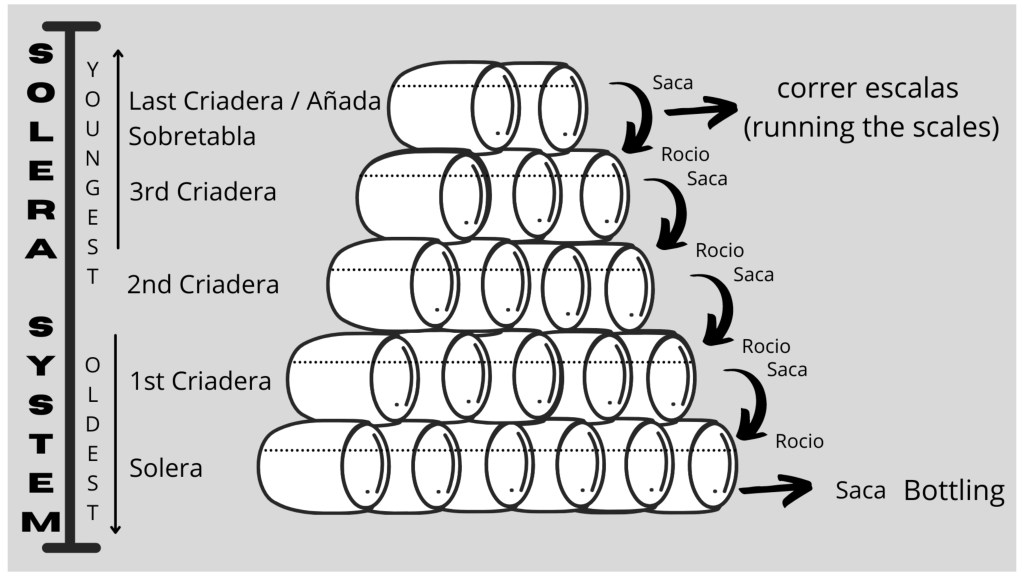
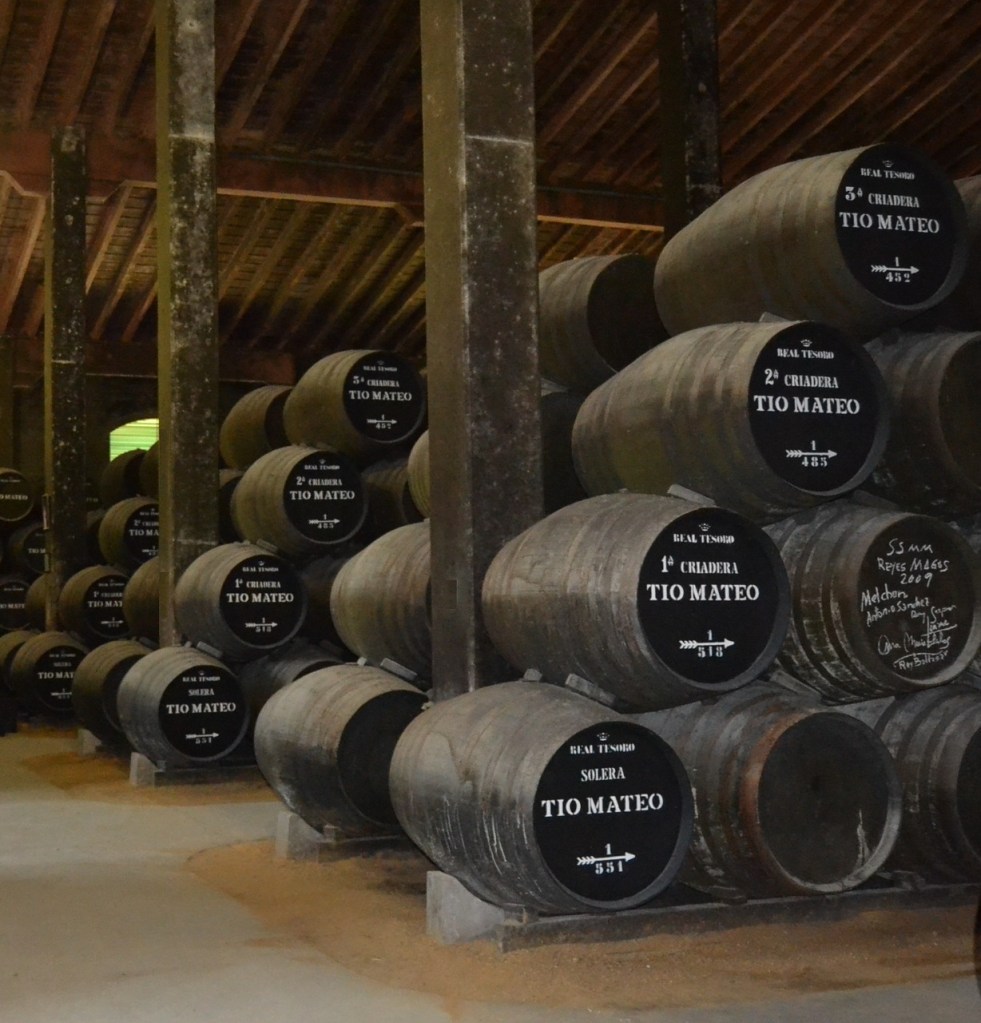
Each solera is made up of various tiers, each in turn composed of a particular number of butts. The tier that contains the oldest wine is at floor level and is called ‘solera’
The tiers placed on top of this, containing progressively younger wine are called criaderas (nurseries) and numbered according to their closeness in age to the solera tier (the closest being the 1st criadera; the next one, the 2nd criadera, and so on).
Running the scales
When it’s time to bottle, about a third of the liquid is removed from each barrel from the bottom row called ‘solera’
This operation is known as saca (taking out). The space thus created in the solera (floor-level) casks is topped up with wine taken from the next oldest scale, namely the saca from the 1st criaderas which sits in the tier above
Then, liquid from the barrels directly above, called “1st criaderas” is used to replace what was taken from the solera.
The space thus created in the 1st criadera is then in turn topped up with wine similarly removed from the 2nd criadera, and so on up to the youngest scale, which is then topped up with wine obtained from the añada system.
The operation of topping up, or refreshing, the space created in a scale is known as rocío (sprinkling)
The whole process of the sacas and rocíos in a solera is called correr escalas (running the scales).
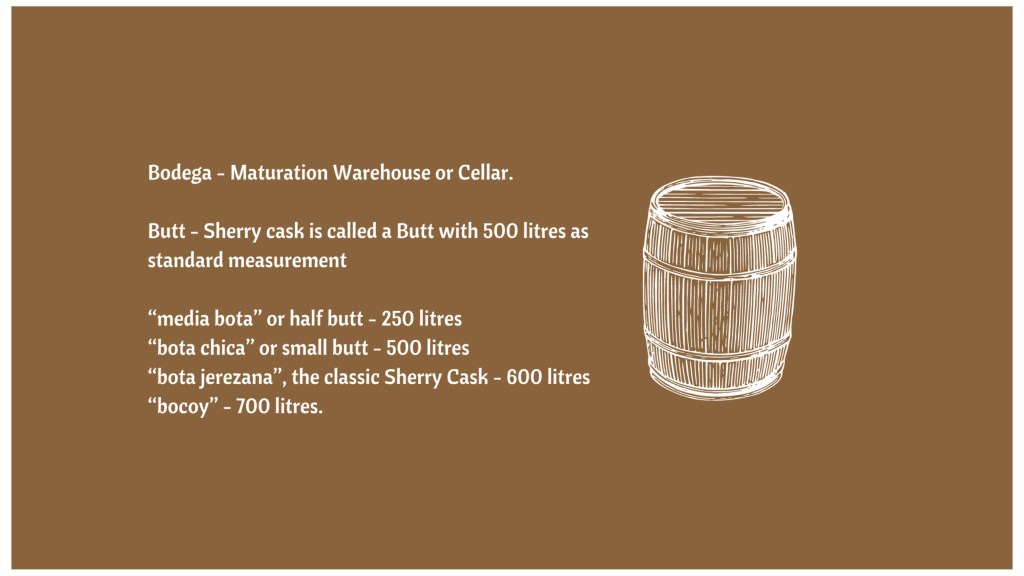
Bodega – Maturation Warehouse or Cellar.
Butt – Sherry cask is called a Butt with 500 litres as standard measurement
“media bota” or half butt – 250 litres
“bota chica” or small butt – 500 litres
“bota jerezana”, the classic Sherry Cask – 600 litres
“bocoy” – 700 litres.
Special categories based on ageing period.
The Consejo Regulador certifies three special categories according to the peculiarities of their ageing:
Sherries with a Certified Age of 20 and 30 years
Sherries with an Indication of Age of 12 and 15 years
Vintage Sherries
Sherries with a Certified Age of 20 and 30 years
Amontillado, Oloroso (sweet or dry), Palo Cortado or Pedro Ximénez.
One of the key factors which characterises Sherry Wines is the ageing method known as “de Criaderas y Soleras”. This is a marvellous, perfect dynamic ageing process, but one which makes it impossible to ascertain the exact age of sherry wines, only enabling us to refer to this in average terms.
The regulations governing Sherries of Certified Age stipulate the application of specific terminologies such as:
V.O.S. – Sherries over the average age of 20 years.
“Vinum Optimum Signatum” (Wine Selected as Optimal) – Latin Term
“Very Old Sherry” – the English term used so often on the labels of this type of sherry.
V.O.R.S. – Sherries over the average age of 30 years.
“Vinum Optimum Rare Signatum” (Wine Selected as Optimal and Exceptional) – Latin term
In English as “Very Old Rare Sherry”.
Sherries With Indication Of Age
These are sherries with an average age of between 12 and 15 years and which have, therefore, been submitted, either totally or partially, to an oxidative or physico-chemical ageing process.
Vintage Sherries
This is a static ageing system (as opposed to the dynamic criadera and solera system) in which sherry wines from a specific harvest are separately aged and at no time blended with other wines from different years.
Types of Sherry Wine
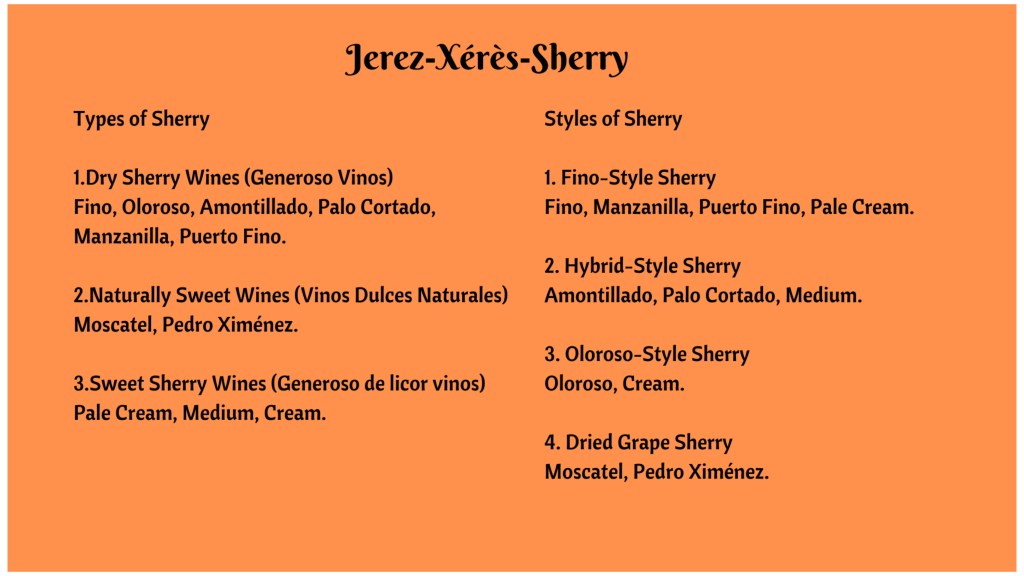
Regulations of the Denomination of Origin “Jerez-Xérès-Sherry” puts forward three groups of Sherry wines as follows
Dry Sherry Wines (Generoso Vinos) – Fino, Oloroso, Amontillado, Palo Cortado, Manzanilla, Puerto Fino.
Naturally Sweet Wines (Vinos Dulces Naturales) – Moscatel, Pedro Ximénez.
Sweet Sherry Wines (Generoso de licor vinos) – Pale Cream, Medium, Cream.
Dry Sherry Wines
Dry Sherry wines are produced by complete fermentation and thus have a minimal content of residual sugar from the grape juice.
Different types are included under this category depending on whether they were passed through ‘biologically ageing’ or ‘oxidative ageing’ or a ‘combination of both’.
Fino
Color – very pale straw yellow
Profile – fino is fresh, crisp
dry, yeasty, almond nutty and tangy
Alcohol – 15%-15.5% abv
Aged – entirely biologically, meaning it was protected from oxygen during its development by a “veil of flor” (film of yeast)
Flor is the veil or thin layer of indigenous yeast cells that forms on top of sherry wines. It is a kind of Ivory coloured, wrinkled, waxy foam, up to two centimeters thick, that protects the wine from air contact, this oxidation.
Temperature of serving – 5-7°C
Storing – Unopened bottles can be kept for 12-18 months. While opened bottles can be stored in a wine fridge for about a week.
Oloroso
Color – pale straw yellow deepens towards intense amber with age
Profile – oloroso is smooth and unctuous.
nuts, tobacco, spices, even animal notes (leather) and exotic woods
Acidity – medium acidity
Alcohol – 18-20% abv
Aged – undergoes Oxidative ageing
Oxidative aging is a process used in the elaboration and aging of wines which purposely allows controlled amounts of air to oxidize wine.
Temperature of serving – 12-14°C
Storing – Unopened bottles can be kept for 24-36 months. While opened bottles can be stored in a wine fridge for about 4-6 weeks.
Amontillado
Color – Golden to mahogany
Profile – Amontillado is crisp
nutty aromas, tobacco, aromatic herbs and often ethereal, polished notes of oak.
Alcohol – 17-20% abv
Aged – starts with biological ageing and continues oxidative ageing.
Temperature of serving – 12-14°C
Storing – Unopened bottles can be kept for 18-36 months. While opened bottles can be stored in a wine fridge for about 2-3 weeks.
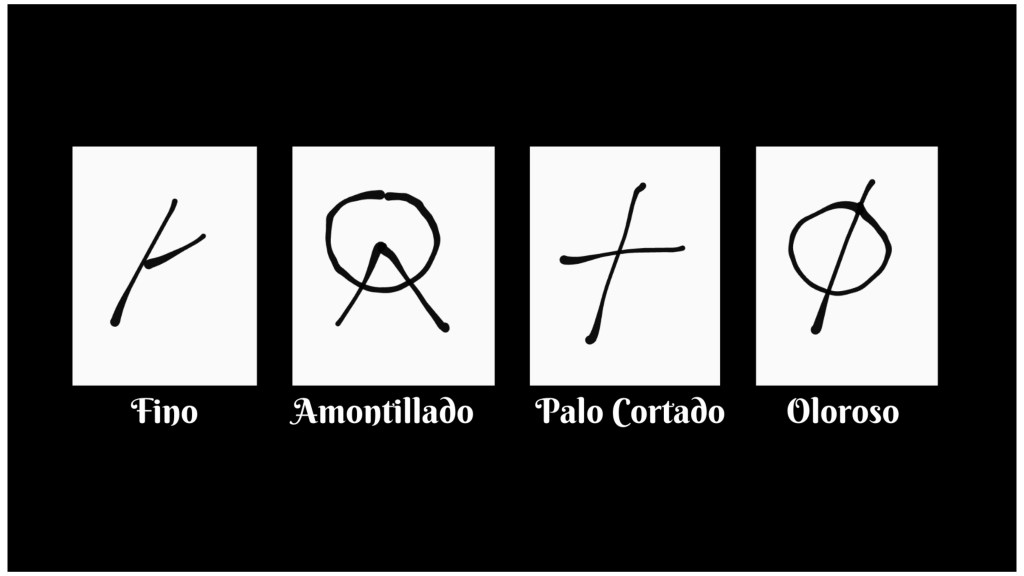
Palo Cortado
Color – Bright mahogany
Profile – similar to Oloroso with lighter structure and great elegance.
Amontillado on the nose and Oloroso on the palate
characteristic lactic note
Alcohol – 18-20% abv
Aged – Palo Cortado are the wines which were actually chosen to be made into Fino-styled Sherry and hence fortified to 15% abv level to promote biological ageing. But sometimes due to external factors the flor fails to develop normally, at such point the casks are fortified to 17%-18% abv to kill the remaining flor and letting the sherry age oxidatively.
The names Dos Cortados, Tres Cortados and Cuatro Cortados sometimes designates multiple fortifications done in order to rectify the wine.
Temperature of serving – 14°C
Storing – Unopened bottles can be kept for 18-36 months. While opened bottles can be stored in a wine fridge for about 2-3 weeks.
Manzanilla
Manzanilla is basically the same as Fino sherry but produced and matured around Sanlúcar de Barrameda, closer to the sea than Jerez, and the only place where it is allowed to be made.
In Spanish, manzanilla is chamomile, which is another aroma typically found in this type of sherry.
Color – very pale straw yellow
Profile – briny flavor compared to regular finos.
light structure with floral notes and an elegant bitterness
Alcohol – 15%-15.5% abv
Aged – Manzanilla is a wine aged biologically in the coastal town of Sanlúcar de Barrameda and protected by a specific Denomination of Origin: “Manzanilla – Sanlúcar de Barrameda”
The specific climatic conditions of this town are responsible for a higher humidity and cooler, more constant temperatures which contributes to a higher yield of a thick flor.
Temperature of serving – 6-9°C
Storing – Unopened bottles can be kept for 12-18 months. While opened bottles can be stored in a wine fridge for about a week.
Types of Manzanilla
Manzanilla/Manzanilla Fina – is the traditional Manzanilla sherry, typically bottled around 3 to 5 years. Maturation of at least 2 years is prescribed by law.
Manzanilla Pasada – is a richer, older Manzanilla in which the flor starts to fade usually around 6 to 7 years
Puerto Fino
A fino sherry from the coastal town of El Puerto de Santa Maria.
Color – pale straw yellow
Profile – identical to Fino with lighter structure
Light and crisp with a hint of saltiness
Alcohol – 15%-15.5% abv
Aged – biologically aged like other finos but should be aged particularly in the town of El Puerto de Santa Maria (the region cool climate encourages a thick flor covering)
Temperature of serving – 6-9°C
Storing – Unopened bottles can be kept for 12-18 months. While opened bottles can be stored in a wine fridge for about a week.
Naturally Sweet Wines
These wines are nearly always made from single grape varieties like Moscatel and Pedro Ximénez. The grapes are sun dried to concentrate the sugar content.
The process of drying grapes in the sun for up to three weeks is called asoleo.
The fermentation is inhibited by addition of a wine-based alcohol which results in wine with extremely high sugar content.
Moscatel
Naturally Sweet Wine
Color – chestnut to an intense mahogany in color.
Profile – very fresh acidity
floral aromas of jasmine, orange blossom and honey suckle in addition to citric notes of lime and grapefruit with a honeyed, raisiny palate.
Alcohol – 15-22% abv
Sugar content 160+ grams of sugar per litre.
Temperature of serving – 12-14°C
On labels – “Moscatel de pasas” made by raisins undergone by the process of asoleo.
“Moscatel Oro” or “Dorado” when it has not undergone the process of asoleo.
The process of drying grapes in the sun for up to three weeks is called asoleo.
Pedro Ximénez
Naturally Sweet Wine
Pedro Ximénez is always made from sun dried grapes thus producing a sweet wine with high concentration of sugars which is generally never below 250 g/l and could often reach more than 400 g/l.
Color – ebony or jet black with iodine colored reflections.
Profile – Velvety and syrupy, with good acidity
sweet notes of dried fruits such as raisins, figs and dates, accompanied by the aromas of honey, grape syrup, jam and candied fruit, at the same time reminiscent of toasted coffee, dark chocolate, cocoa and liquorice.
Alcohol – 15-22% abv
Sugar content – 212+ grams of sugar per litre.
Temperature of serving – 12-14°C
Sweet Sherry Wine
These Sherry wines are produced by blending (also called ‘cabeceo’) of dry sherry wines (generoso vinos) with Rectified Concentrated Grape Must (RCGM) or Pedro Ximénez Wine (PX)
The regulations of the Denomination of Origin simply establish very few broad limits so it is difficult to give precise descriptions of each one as each bodega has its own criteria when making up their “cabeceos” for their commercial brands.
The three main styles include Pale Cream, Medium and Cream.
Rectified Concentrated Grape Must (RCGM) – This is a more modern ingredient, and is simply grape juice which has been concentrated by other means than heating, which darkens the wine and intensifies the flavour.
Pale Cream
Composed of Fino or Manzanilla
Color – yellow straw to pale gold
Profile – sharp bouquet of biologically aged wine, with hints of hazelnut and dough received from the flor.
Light and fresh in the mouth but with a delicate sweetness which is pleasant on the palate and reduces the bitter aftertaste of biologically aged wines, which are naturally very dry.
Sugar content – 45-115 grams of sugar per liter.
Alcohol – 15.5%-22% abv
Temperature of serving – 7-9°C
Storing – Unopened bottles can be kept for 12-18 months. While opened bottles can be stored in a wine fridge for about a week.
Medium
Often composed of Amontillado.
Color – Amber to light mahogany or dark chestnut color.
Profile – Smooth and round on the palate.
nutty aromas, tobacco, aromatic herbs and often ethereal, polished notes of oak.
Sugar content – 5-45 grams of sugar per litre – labelled as medium dry
45-115 grams of sugar per litre -labelled as medium sweet
Alcohol – 15-22% abv
Temperature of serving – 12-14°C
Storing – Unopened bottles can be kept for 18-36 months. While opened bottles can be stored in a wine fridge for about 2-3 weeks.
Cream sherry
Composed of Oloroso or Amontillado, blended with some Pedro Ximénez or Moscatel to make it sweeter.
Color – chestnut brown to dark mahogany,
roasted nuts, such as in nougat or caramel
Sugar content – 115-140 grams of sugar per litre
Alcohol – 15.5-22% abv
Temperature of serving – 12-14°C
Storing – Unopened bottles can be kept for 24-36 months. While opened bottles can be stored in a wine fridge for about 4-6 weeks.
Styles of Sherry Wine.
- Fino-Style Sherry: These styles are made entirely via biological ageing.
- Hybrid-Style Sherry: These styles of Sherry begin as a fino Sherry, aging under flor. However, during the aging process the flor dies out, allowing the wines to age both biologically and oxidatively while in the solera.
The sherry which begins as a fino sherry and further ages as an oloroso sherry. (During ageing the flor dies out thus paving way to biological ageing) - Oloroso-Style Sherry: These styles are made via oxidative ageing.
- Dried Grape Sherry: These style is produced using grapes harvested at a high level of ripeness with the sugars further concentrated by drying the grapes in the hot sun. They are produced primarily from Pedro Ximénez or Moscatel grapes.
En Rama
Minimal filtering
The most important characteristic of biologically aged sherry (Fino and Manzanilla) is flor. This layer of yeast cells lives on the surface of the wine and consumes sugars, alcohol and other components of the wine to add nutty, saline and yeasty aromas. It also blocks oxygen contact, resulting in a dry and pale style of sherry.
Due to consumer demand for light wines, heavy filtration is carried out to create a clear and stable product, with easy aromas and no cloudiness or sediments. The con of this is that a lot of richness, colour and flavour is lost because of filtering out the yeast residues and impurities.
But nowadays many consumers are looking for the rich and intense style of sherry. So the sherry which does not go under heavy filtration has deeper color and more intense flavor than its filtered counterparts.
This unfiltered sherry is called ‘en rama sherry’ – the freshest, most alive, most immediate expression of the wine. Sometimes only a very light filtration is carried out to remove the biggest clots of yeast or other impurities.
During springtime in May the environmental conditions are perfect for flor (rather humid, not too hot) and the layer grows thicker than in other seasons making it the ideal time to bottle the en rama sherries without disturbing or breaking the flor layer.
 The Wine Geek